Pakistan National Festivals and Cultural Occasions
Published: 25/02/2026
Have you ever seen a photo of a colorful festival and stopped to look? The bright colors and smiling faces make you pause and wonder where this celebration is taking place.
Let me show you.
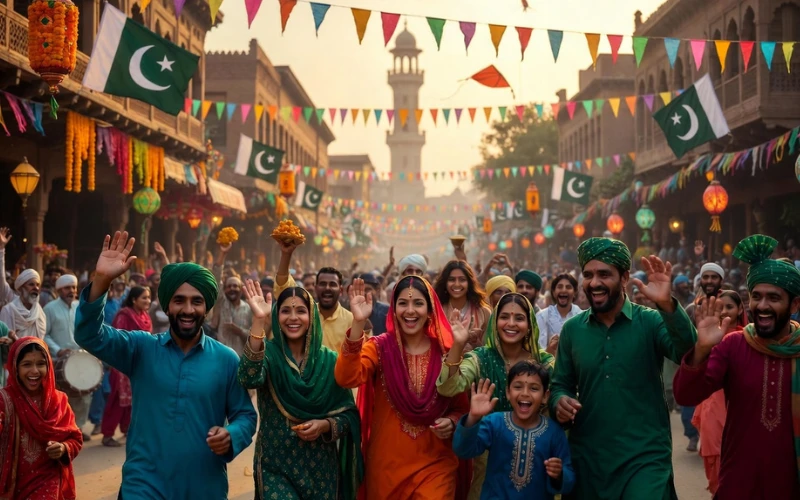
Pakistan is a country where people love to celebrate. Pakistan national festivals bring people together in every season. Old traditions live side by side with new ways of life. Each part of Pakistan has its own special way of celebrating. This makes Pakistan a very interesting place to visit.
Most people do not know this. Pakistan does not have just one or two festivals. It has many festivals. Each one tells a story. People have been celebrating these festivals for a very long time, and Pakistan’s national festivals reflect the history, culture, and unity of the nation.
Are you ready to learn more?
Let’s start.
Why Pakistan Has So Many Festivals
Pakistan is at a place where old civilizations met. The Indus Valley people lived here. Persian traders came here. Central Asian travelers passed through. Local tribes lived in the mountains. All these people brought their own customs. This is why Pakistan has so many different festivals.
In Punjab, people fly kites during Basant. The sky looks beautiful with so many colors. In the north, the Kalash people dance for three days to welcome spring. This tradition is very old. In Balochistan, people dance the lewa to show their strength and pride.
What Makes These Festivals Special
These festivals are primarily community-based and reflect long-standing traditions. They are for the local people.
When you go to a festival in Pakistan, you see real life. A grandmother teaches her granddaughter how to make sweets for Eid. A shepherd walks his animals through the mountains. They are not acting. They are just living their life. They celebrate because this is how they always mark special times. This is how they keep their culture alive.
These traditions continue in their original form, which is becoming rare in many parts of the world.
This guide will help you learn about:
- Big festivals that all of Pakistan celebrates
- Small local festivals that many tourists do not know about
- When these festivals happen, you can plan your visit
- Why are these festivals important to the people
From Lahore’s kite festival to Hunza’s flower season, from Sindh’s holy places to Chitral‘s polo games… Pakistan has so much to offer. These festivals are not just for watching. They are for feeling and understanding.
Punjab Province – Where Traditions Paint the Sky
Punjab is the heart of Pakistan. It is the most populous province. Here, festivals are big and colorful. The sky fills with kites. The streets fill with music. The people are warm and welcoming. Punjab knows how to celebrate.
Basant Festival – The Famous Kite Festival of Lahore
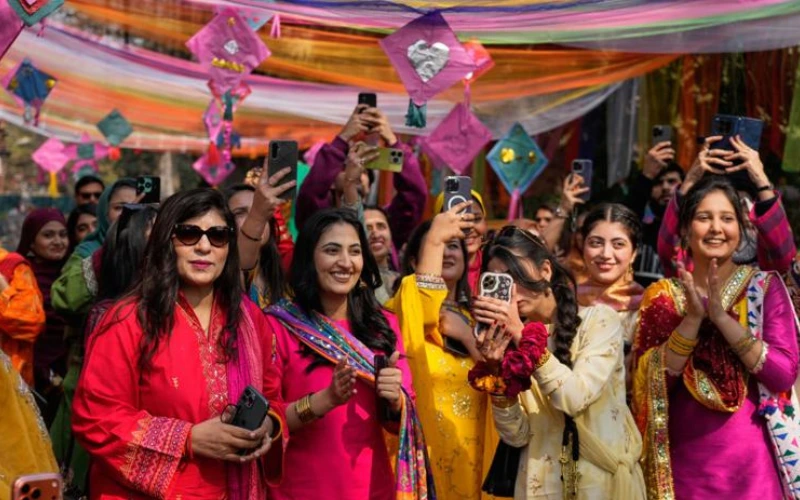
If you know one festival from Pakistan, it is probably Basant. It happens every year in February. This spring festival traditionally fills the skies of Lahore with colorful kites, though public celebrations have faced restrictions in recent years. But Basant is not just about flying kites. It shows the true spirit of Punjab.
The festival welcomes spring. Punjabi people celebrate with great joy. Families come together on rooftops days before the event. They prepare special kite strings called *dor*. They choose their best kites. The night before Basant, Lahore’s old city becomes very busy. There is music, food, and excitement everywhere.
Many visitors do not know this. Basant started as a farm festival. Long ago, it celebrated the wheat harvest. It marked the end of a cold winter. The yellow color of Basant shows the mustard flowers that grow all over Punjab at this time. People eat special foods like *sarson ka saag* and *makki ki roti*. These foods connect the festival to the land.
Basant is also about bringing people together. Neighbors who do not talk much during the year meet on rooftops. Different neighborhoods compete with each other in friendly ways. When someone cuts another person’s kite, people shout “Bo kata!” This means “I cut it!” The whole city fills with cheers and laughter.
Vaisakhi – The Harvest Festival
Basant is famous, but Vaisakhi is also very important. This is especially true in Punjab’s farming areas. Vaisakhi happens on April 13 or 14. It is the Punjabi New Year. It is also a harvest festival.
In villages, Vaisakhi is a time to say thank you. Farmers go to gurdwaras and temples. They pray for good crops. The famous Bhangra and Giddha dances come from these celebrations. Dancers perform in the fields to celebrate the golden wheat that is ready to be cut.
This festival is very special for Sikh people around the world. In 1699, Guru Gobind Singh started the Khalsa on Vaisakhi. In Pakistan, gurdwaras like Nankana Sahib and Panja Sahib welcome thousands of Sikh visitors at this time. This creates a special feeling of peace and sharing between different religions.
Urs Festivals – Holy Gatherings at Sufi Shrines
Punjab has many Sufi shrines. These shrines hold Urs festivals every year. Large numbers of devotees attend these events every year, especially at major shrines. They come from all religions.
The Urs of Data Ganj Bakhsh in Lahore is one of the biggest. People come from all over the subcontinent.
These holy gatherings welcome everyone. You will see Muslims, Christians, Sikhs, and Hindus together. They all come to honor saints who taught love and unity long ago. There is Qawwali music. People share free meals called *langar*. The feeling of devotion brings everyone together, no matter what religion they follow.
Sindh Province – Celebrating the Land of Sufis
Sindh is a land of ancient history and deep spirituality. It is home to the Indus Valley Civilization. It is also home to many Sufi saints. The people here love poetry, music, and Sufi traditions. Festivals in Sindh are soulful and beautiful.
Sindhi Cultural Day – Ajrak and Topi Festival
Every first Sunday of December, Sindh becomes a sea of red and white. This is Sindhi Cultural Day. People also call it Sindhi Topi Ajrak Day. It is one of the most beautiful sights in Pakistan. The ajrak is a traditional shawl with special prints. The Sindhi cap is called topi. Millions of people wear these with pride on this day.
But this festival is not just about clothes. It is about being proud of Sindhi culture and history. The Indus Valley Civilization started here. It is one of the oldest city cultures in the world. Sindhi Cultural Day connects modern Sindhi people to this old history.
During the celebrations, you will find cultural programs all over the province. Hyderabad, Karachi, and Larkana hold big events. There is folk music. There are traditional dances like Jhoomar. People recite poetry in the Sindhi language.
Food stalls sell real Sindhi food. You can eat Sindhi biryani, sai bhaji, and koki. It offers visitors an authentic experience of traditional Sindhi cuisine.
Urs of Lal Shahbaz Qalandar – The Sufi Trance Festival
Sehwan Sharif is a small town in Sindh. It hosts one of the most powerful spiritual gatherings in the world. This is the Urs of Lal Shahbaz Qalandar. He was a Sufi saint who lived in the 13th century. Every year, people come to his shrine. The place fills with devotion, music, and spiritual energy.
The main event is the dhamaal. This is a Sufi dance. People dance to the beat of dhol drums and naqqara drums. The music is very strong. Devotees enter a trance. They spin and move for hours. The famous Qawwali song “Dama Dam Mast Qalandar” plays everywhere. The feeling is both exciting and deeply spiritual.
Cheti Chand – Sindhi New Year
Cheti Chand happens in March or April. It is the Sindhi New Year. It also marks the harvest season. The festival honors Jhulelal. He is the patron saint of the Sindhi people. People offer special prayers. They hold community feasts. They organize cultural programs to celebrate.
Khyber Pakhtunkhwa – Where Courage Meets Celebration
Khyber Pakhtunkhwa is a land of mountains and brave people. The people here are known for their hospitality and strength. Festivals in this province are full of energy. There is polo at high altitudes. There is music and dance. The celebrations show the proud spirit of the Pashtun people.
Shandur Polo Festival – The Roof of the World
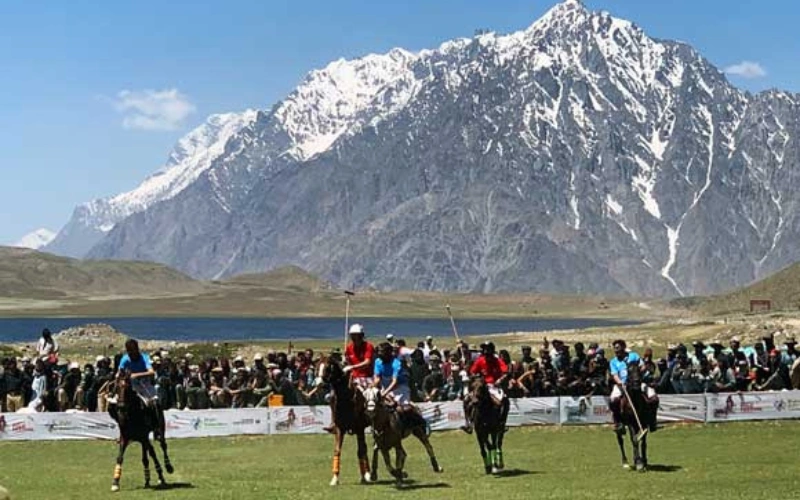
Imagine watching a polo match at 12,200 feet above sea level. Snow-covered mountains surround you. Beautiful lakes shine nearby. This is the Shandur Polo Festival. It happens every July. It takes place at Shandur Pass. It is widely known as one of the highest polo grounds in the world. The festival lasts three days. It offers a unique cultural and natural setting that is rarely seen elsewhere.
Teams from Chitral play against teams from Gilgit-Baltistan. The players are not just playing a game. They are fighting for cultural pride. The polo here is not like the fancy version in rich clubs. It is rough and fast. It is played on natural grass. There are very few rules.
But Shandur is not just about polo. The festival area becomes a big camping site. Thousands of visitors put up tents. In the evenings, there is traditional music. You can hear Surnai and Dadul performances. People tell stories. They share local foods like chapshuro and mamtu.
Jashan-e-Chitral – Valley’s Cultural Show
Jashan-e-Chitral is a newer festival. But it has quickly become very important. It celebrates the unique culture of the region. It happens every year. The festival shows the traditions of the Khowar-speaking people of Chitral. It also shows the customs of smaller groups like the Kalash people.
Nowruz – The Persian New Year
In certain regions, such as Chitral and nearby communities, people celebrate Nowruz with great joy. This is an old Persian festival.
It marks the first day of spring. It is the start of the new year. Traditional celebrations include setting up the Haft Sin table. This table has seven special items. People clean their homes for spring. They wear new clothes. They visit family and friends.
Gilgit-Baltistan – Festivals Among Giants
Gilgit-Baltistan contains some of the world’s tallest mountain peaks. K2 and Nanga Parbat live here. The land is beautiful but tough. People here celebrate among these giants. Their festivals are simple but full of joy. They give thanks for harvests. They play polo in the mountains. The scenery is breathtaking.
Babusar Polo Festival – Mountain Polo at Its Best
This festival is like Shandur but has its own special style. The Babusar Polo Festival happens at Babusar Top. Some of the highest mountains in the world surround this place. You can see the mighty Nanga Parbat from here. The festival happens in July or August. This is when the mountain pass is open for travel. Teams from different valleys of Gilgit-Baltistan come to play.
Harvest Festivals of Hunza and Skardu
In Gilgit-Baltistan, farming is life. People celebrate harvests with joy and thanks. In Hunza, apricots become ripe in June and July. The whole valley celebrates. People gather together. There is traditional music. Families prepare special dishes.
Silk Route Festival – Celebrating Old Connections
The Silk Route Festival celebrates Gilgit-Baltistan’s place in history. Long ago, this region was an important stop on the ancient Silk Road. This event shows how the area connected different cultures, ideas, and trade routes.
Balochistan – Old Traditions in a Rugged Land
Balochistan is the largest province of Pakistan. It is mostly desert and mountains. Life here is hard. But the people have kept their old traditions alive.
Their festivals show their love for their land and their animals. They celebrate with music, poetry, and traditional sports. The culture here is ancient and strong.
Sibi Mela – The Big Cattle Festival
Every February, a small town called Sibi in Balochistan hosts one of Pakistan’s oldest and most important festivals. This is the Sibi Mela. It started as a cattle fair during British rule. Now it has grown into a big cultural celebration. It shows the traditions of Balochistan.
The cattle show is still the main part. Thousands of cattle, horses, camels, and sheep come from all over the province. But Sibi Mela is more than just farm animals. Traditional Balochi tents called *gidaans* appear everywhere. They create a temporary city. Families camp here for many days.
Balochi Cultural Day – Celebrating Identity
Like Sindh, Balochistan also has its own Cultural Day. People usually celebrate it on March 2. On this day, the Baloch people wear traditional clothes. Men wear loose *shalwar* and long *kurta*. They often wear special turbans. The turban style shows which tribe they belong to. Women wear dresses with beautiful embroidery.
Coastal Festival of Gwadar
Gwadar is becoming an important port city. Because of this, the Coastal Festival has become more popular. This celebration focuses on the sea heritage of the Makran coast. It includes boat races, fishing competitions, and seafood festivals.
Kalash Valleys – Old Rituals in a Modern World
Deep in the mountains of Chitral lie the Kalash Valleys. Here live the Kalash people. They are a small community with their own religion and customs. Their festivals are very old. They dance and sing to welcome the seasons. They perform rituals that have existed for thousands of years. It feels like traveling back in time.
Chilam Joshi Festival – Welcoming Spring the Kalash Way
In the faraway valleys of Bumburet, Rumbur, and Birir live the Kalash people. They are a unique community. They have their own religion, language, and customs. These customs are older than Islam. Their most important festival is Chilam Joshi. It is celebrated in May to welcome spring. When you see this festival, you feel like you have gone back in time.
Chilam Joshi lasts for several days. It has special rituals, dancing, singing, and feasting. The festival starts with prayers at the Jestak Han. This is the house of the goddess Jestak. The community gathers here. They ask for blessings for the coming year.
Then the celebration begins. Kalash women wear special headdresses. These have shells, beads, and colorful embroidery. They perform circle dances. They dance for hours. The men play traditional instruments. They sing songs in the Kalasha language. These songs have been passed down through many generations.
Uchau and Chaumos – Other Kalash Festivals
The Kalash people have other important festivals too. Uchau is celebrated in autumn. It marks the harvest. People perform rituals to thank the gods for the crops.
Chaumos is the winter solstice festival. It is the most sacred festival in the Kalash calendar. It lasts for several days. It has complex rituals, feasting, and dancing.
National Festivals – When Pakistan Unites
Pakistan is a diverse country. Different provinces have different languages and cultures. But on national festivals, the whole country comes together.
These are the days when Pakistanis celebrate as one nation. They show their love for their country. They remember their history. They share joy across all provinces.
Independence Day – August 14th
We cannot talk about Pakistan’s festivals without Independence Day. On August 14, 1947, Pakistan became an independent country. Every year since then, people celebrate this day with great joy.
People start preparing weeks before. Green and white decorations appear on buildings, streets, and vehicles. People buy many flags. Tailors get many orders for special Independence Day clothes. The night before is called Independence Night. People set off fireworks. There are concerts and celebrations. These continue until morning.
Pakistan Day – March 23rd
March 23rd remembers the Lahore Resolution of 1940. On this day, the All-India Muslim League formally asked for a separate homeland for Muslims. The day has military parades, award ceremonies, and national reflections on the country’s journey.
Eid-ul-Fitr and Eid-ul-Adha
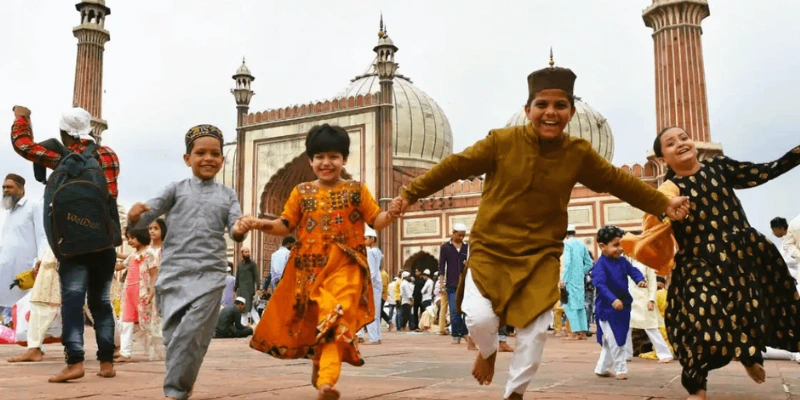
These two Islamic festivals are celebrated all over Pakistan. People celebrate with deep religious faith and cultural joy. Eid-ul-Fitr marks the end of Ramadan. This is the month of fasting. It is a time of joy, feasting, and giving.
The Eidi tradition is very special. Elders give money to younger family members. Every Pakistani child waits for this.
People prepare special foods like sewayyan (sweet vermicelli), sheer khurma, and various meat dishes. Everyone must wear new clothes. People visit relatives and friends. They exchange greetings of “Eid Mubarak.”
Defence Day – September 6th
September 6th marks a major event of the 1965 war between India and Pakistan and honors those who lost their lives. The Pakistani armed forces successfully defended the country. This day honors the martyrs who gave their lives for the nation.
Frequently Asked Questions (FAQs)
Festivals happen all year round. But February to April and July to September have the most events. Basant is in February. Shandur Polo is in July. Sindhi Cultural Day is in December. These are major highlights.
Yes, Pakistan’s festivals are generally safe and welcoming for foreign visitors. However, it is better to travel with a good tour operator. Respect local customs. Stay updated on security situations in specific areas.
Basant in Lahore is incredible. You can see thousands of kites in the sky. However, Chilam Joshi in Kalash and the Shandur Polo Festival offer unique cultural experiences in beautiful natural settings.
Yes, foreigners can attend most religious festivals. This includes Urs celebrations at Sufi shrines. However, during Muharram, some areas may have restrictions. Visitors should be very respectful of the solemn nature of these observances.
Most cultural festivals are free to attend. However, some events, like polo matches at Shandur, might have small entry fees. Foreign tourists may need special permits.
Punjab probably has the most diverse calendar. It has Basant, Vaisakhi, many Urs festivals, and seasonal celebrations. However, each province offers unique experiences that are worth exploring.
Always ask permission before photographing people. This is especially important for women and religious figures. Some ceremonies may not allow photography at all. When in doubt, observe first or ask a local guide.
Each festival has its special foods. During Basant, try sarson ka saag and makki ki roti. At Sindhi Cultural Day, do not miss Sindhi biryani. In the north, try chapshuro and mamtu. And everywhere, enjoy the festival sweets!
These festivals are mainly Pakistani. But some like Nowruz and certain Sufi Urs celebrations are also observed in neighboring countries. However, each region adds its own unique flavor to the celebrations.
 Subscribe to my YouTube channel
Conclusion – Pakistan National Festivals 2026
Pakistan national festivals and cultural celebrations reflect the true spirit of the country. From Basant in Punjab to Chilam Joshi in the Kalash valleys, from Sufi Urs in Sindh to mountain polo in Gilgit Baltistan, each province adds depth to the Pakistan festival calendar.
These events are more than celebrations. They represent history, faith, harvest, and community. Cultural festivals in Pakistan continue to connect generations and preserve local identity across the provinces.
If you are planning to explore festivals in Pakistan by province in 2026, check confirmed dates, travel details, and local guidelines in advance. Plan early for major events and experience Pakistan’s living heritage in its most authentic form.

- Be Respectful
- Stay Relevant
- Stay Positive
- True Feedback
- Encourage Discussion
- Avoid Spamming
- No Fake News
- Don't Copy-Paste
- No Personal Attacks
- Be Respectful
- Stay Relevant
- Stay Positive
- True Feedback
- Encourage Discussion
- Avoid Spamming
- No Fake News
- Don't Copy-Paste
- No Personal Attacks
