Travel Warnings Iran Israel USA War 2026
Published: 03/03/2026
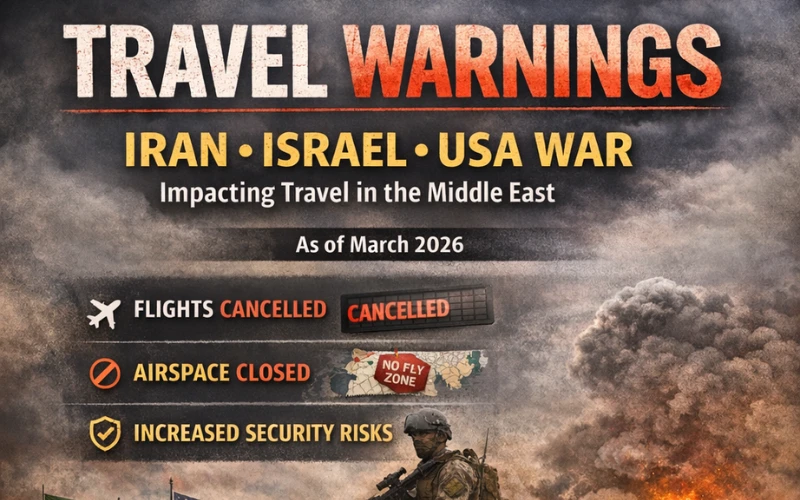
The ongoing Travel Warnings Iran, Israel USA War situation is reshaping travel plans across the Middle East. As of March 2026, many governments have issued serious travel warnings and urged their citizens to reconsider or avoid trips to the region, including parts of Iran, Israel, and neighbouring countries.
Flights are being cancelled, airspace closures are disrupting routes, and security risks are increasing. If you are planning to travel through the Middle East or use its airports for layovers, these developments could directly affect your journey.
For the latest safety advice and travel guidance, read this guide carefully to make informed decisions before booking or leaving home.
Let’s start.
Why Travel Warnings Have Been Issued
After recent military strikes involving the United States and Israel targeting Iranian positions, tensions increased quickly. Iran responded with missile and drone activity in different parts of the region. Because of this, many countries now say the security situation is unstable and can change without warning.
Due to these events, several governments updated their official travel advice and warned citizens about serious risks.
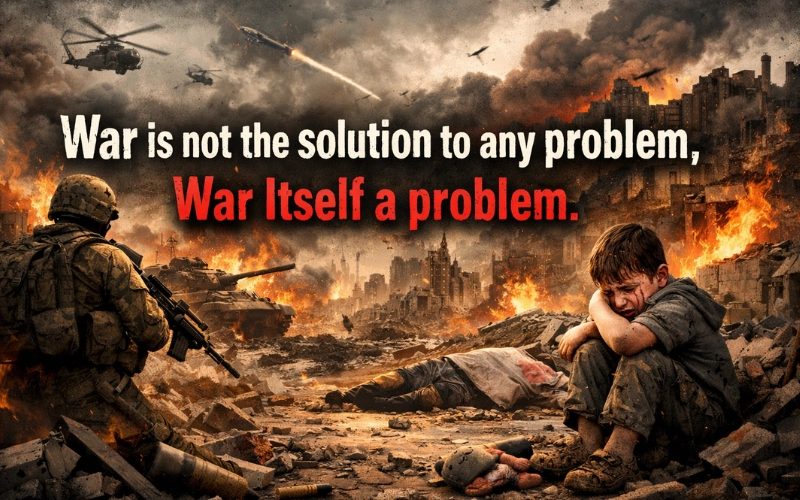
War is not a solution to problems; war itself is a problem.theglobevista.com
Official Government Travel Warnings
The U.S. Department of State issued a worldwide caution and urged Americans to reconsider travel to several Middle Eastern countries. In some areas, citizens were advised to leave immediately if it was safe to do so.
Other governments have also told their citizens to:
- Avoid all non-essential travel to Iran
- Avoid travel to parts of Israel near conflict zones
- Stay away from military areas
- Monitor embassy alerts daily
These warnings are not political statements. They are safety alerts based on real security risks.
Countries Most Affected Right Now
As of March 2026, travel warnings are strongest for several countries in the Middle East. Governments around the world have warned citizens about serious risks. These warnings are based on ongoing military activity, airspace closures, attacks on infrastructure, and a rapid rise in violence.
Iran
Iran is the most strongly affected country right now. After joint military strikes by the United States and Israel, Iran has closed its airspace to civilian flights until further notice.
- Most governments advise against all travel to Iran because of ongoing military operations and security dangers.
- Airports and their airspace are shut, meaning flights cannot land or take off safely.
- The situation is unpredictable and can change without warning, so travelers should not plan trips there now.
Israel
Israel is also under strong travel warnings.
- The government has declared certain areas under emergency conditions because of attacks near the borders and cities.
- Civilian airspace in Israel has been closed to normal commercial flights for safety reasons.
- Travel in and around Israel is highly restricted and dangerous for regular tourists at this time.
Iraq and Lebanon
These two countries are not the central actors in the war, but both are now considered high-risk destinations for travelers:
- Regional tensions and military activity have increased security threats in both Iraq and Lebanon.
- Lebanon has seen military clashes along its border with Israel, and fighting has displaced thousands of civilians.
- Iraq’s airspace is fully closed, and its borders are impacted by the nearby conflict.
- Governments say travel to these countries should be avoided unless necessary.
Gulf Countries (UAE, Qatar, Kuwait, Bahrain, Saudi Arabia)
Many Gulf states — which normally are safe travel hubs — are now under high caution and travel alerts:
- Countries like the United Arab Emirates, Qatar, Kuwait, and Bahrain have seen missile and drone activity, explosions, and airspace risk from Iranian retaliatory strikes.
- Because of this, many governments have raised their travel alerts from moderate to orange or red, meaning avoid all non-essential travel.
- Even if there is no open conflict inside these countries, airport operations are disrupted, and flights are cancelled or suspended due to airspace closures.
- In some cases, normal commercial flight operations like Emirates, Etihad, and Qatar Airways were temporarily halted because the airspace was unsafe for civilian aircraft.
Some countries, like Saudi Arabia, so far have only partial airspace restrictions and are not active war zones themselves.
But most governments are warning travelers that safety conditions in the region can change suddenly without notice because of ongoing military retaliation and regional instability.
Flight Cancellations and Airspace Closures
This conflict is not only about borders. It is affecting global aviation.
According to international flight reports, many airlines have cancelled or rerouted flights that normally pass through Middle Eastern airspace.
Major airlines, including Emirates and Qatar Airways, have adjusted schedules due to security concerns.
Airports in large hubs such as Dubai International Airport and Doha have faced delays and temporary restrictions.
What this means for travelers:
- Flights may be cancelled on short notice
- Layovers may become very long
- Some routes to Europe and Asia are taking longer paths
- Ticket prices may increase
Even if your final destination is not Iran or Israel, your flight could still be affected if it crosses Middle East airspace.

Is It Safe to Travel Right Now
The honest answer: it depends on where you are going.
Travel experts and government agencies strongly recommend avoiding non-essential travel to active conflict zones.
If you must travel:
- Check your government’s official travel advisory website daily (Like Australia, Bali, Uk & USA travel Advisories)
- Register with your embassy if you are already in the region
- Confirm your flight status before going to the airport
- Avoid public gatherings and military areas
- Keep emergency contacts ready
Travel insurance may not cover war-related disruptions. Many policies exclude losses caused by armed conflict. Always read your policy details carefully.
How This Affects Travelers from Pakistan and South Asia
Many travelers from Pakistan and South Asia use Middle Eastern hubs to reach Europe, North America, and Africa.
If you are flying from Pakistan:
- Expect possible rerouting
- Expect longer flight times
- Expect higher ticket prices
- Check if your airline is operating normally
Even transit passengers can be affected if airports suddenly close or airspace becomes restricted.

What Travelers Should Do Now
The current travel environment linked to the Travel Warnings Iran, Israel USA War remains unpredictable. Conditions can change with little notice because of security developments in Iran, Israel, and regional responses from the United States. Travelers should act carefully and make decisions based on reliable information.
- Stay calm and rely on verified updates instead of rumours
- Do not ignore travel warnings; they highlight real security risks
- Check official government and embassy advisories daily
- Postpone nonessential trips to areas under travel warnings
- Keep travel plans flexible with adjustable tickets and bookings
- Consider alternative routes that avoid high-risk regions
- Prepare contingency plans for possible delays or cancellations
- Monitor airline updates before heading to the airport
This situation continues to evolve. Staying informed and planning with flexibility is the best way to travel safely in uncertain conditions.
I know not with what weapons World War III will be fought, but World War IV will be fought with sticks and stones.Albert Einstein
Final Thoughts
The ongoing travel warnings related to the conflict involving Iran, Israel, and the United States remain serious and can impact trips to the Middle East. Governments continue advising caution, and airlines are adjusting routes due to security and airspace concerns. This means travel plans may change quickly and without notice.
If your journey includes this region, careful planning and regular updates from official travel advisories are essential. Flexibility in dates and routes helps you handle unexpected disruptions. Staying informed and prioritizing safety is the smartest approach in today’s travel environment.
For the latest updates and practical travel guidance, check official advisory sources before making final travel decisions.
FAQs (Travel Warnings Iran, Israel, USA War)
It means governments are advising travelers to be careful or avoid certain areas because of security risks from the ongoing conflict involving Iran, Israel, and the United States. These warnings help travelers stay safe and avoid disruptions.
Many flights are operating, but routes and schedules have changed. Airlines are avoiding risky airspace, and some airports may face delays or cancellations. Always check your airline before traveling.
Safety depends on the country and region. Areas under travel advisories carry a higher risk. If you must travel, stay informed and follow government guidance.
Warnings are strongest for Iran and parts of Israel. Security concerns have also increased in Iraq, Lebanon, and some Gulf countries due to regional tensions.
If your destination is in a high-risk area, consider postponing nonessential travel. If travel is necessary, plan carefully and monitor updates.
Some insurance policies may not cover losses related to war or political instability. Read your policy and contact your provider for details.
Airspace restrictions mean planes cannot fly through certain regions. Flights are rerouted, which may increase travel time and costs.
Check official government travel websites and your airline’s updates. These sources provide the most reliable information.
Countries like the UAE, Qatar, and Bahrain are not active conflict zones, but travel disruptions and caution are advised due to regional tensions.
Contact your airline for rebooking options and monitor your booking for updates. Airlines usually assist passengers with alternative arrangements.
Disclaimer: This article was written in March 2026, using official government sources and news reports. Travel warnings change quickly. Always check your government’s official travel advice before making decisions.
TheGlobeVista.com provides information to help you stay safe, but we are not responsible for the decisions you make.
Sources: US State Department, UK Foreign Office (FCDO), Australian Department of Foreign Affairs (DFAT), Canadian Global Affairs, flight tracking services, CNN, Reuters, BBC, and official embassy statements.

- Be Respectful
- Stay Relevant
- Stay Positive
- True Feedback
- Encourage Discussion
- Avoid Spamming
- No Fake News
- Don't Copy-Paste
- No Personal Attacks
- Be Respectful
- Stay Relevant
- Stay Positive
- True Feedback
- Encourage Discussion
- Avoid Spamming
- No Fake News
- Don't Copy-Paste
- No Personal Attacks
